Maintenance Operations at Height VR Training
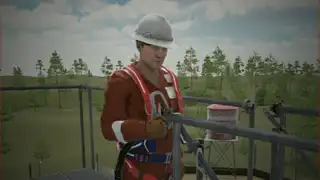
Repairing a damaged structure at height means every step, from checking access authorization to tethering your tools, has to happen in the right order. This immersive VR training exercise puts workers through a full maintenance task on a scaffold, start to finish, before they carry a wrench up a real one.
Description
Maintenance work at height carries a risk that general fall-protection training doesn’t fully address: the worker isn’t just present at height, they’re actively repairing something, often on a structure that’s already damaged or compromised. That means managing tools, materials, and attention while still verifying every fall protection step, and a lapse in any one of those areas, an unchecked access card, an unverified anchor point, an untethered power tool, can turn a repair job into an incident.
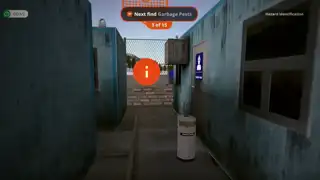
This VR exercise trains workers through the complete sequence of a maintenance task at height, not just the fall protection basics. Participants start by checking the access card at the entry point, recognizing that a green tag means the structure is cleared for entry and a red tag means it isn’t, then clear the work area of obstructions before proceeding.
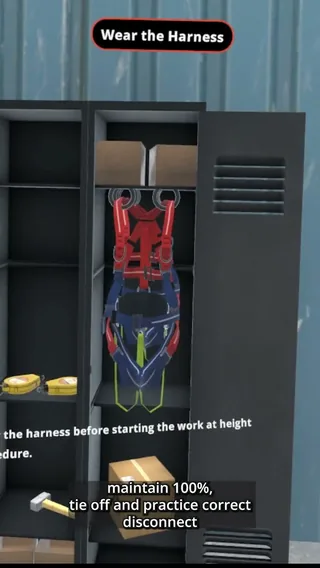
They identify a certified anchor point on the scaffolding guardrail, inspect it for damage or corrosion, and connect their lifeline with a locking carabiner or self-locking hook, confirming the connection with a tug test before relying on it.
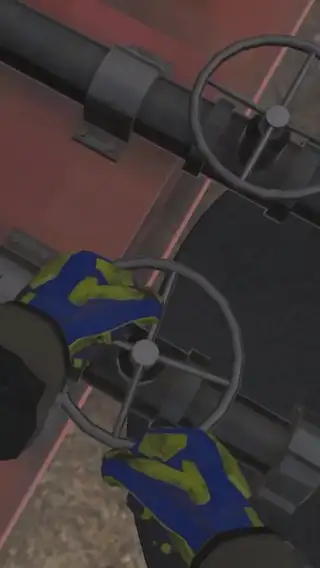
From there, they secure every manual, electric, and pneumatic tool to its own anchor point, since a dropped tool at height is a hazard to everyone below, and finish the task with proper housekeeping: clearing debris, storing materials, and confirming guardrails and toe boards are intact before descending and detaching at ground level.
The exercise reflects the anchor and connection requirements that make a fall arrest system reliable during active work, not just when a worker is standing still: an anchor point free of visible wear, a lifeline free of knots or twists, a locking connector that can’t disconnect accidentally, and enough lifeline length for the task without leaving excess slack that increases fall distance. Building the training around this level of detail means workers rehearse the judgment calls, not just the checklist items.
For workers, that means treating each maintenance task at height as a sequence with a clear beginning and end, rather than something to speed through once the harness is on. For supervisors, it means fewer incidents caused by tools left untethered, anchor points that were never actually verified, or work areas left cluttered when a task wraps up in a hurry.
This exercise covers the practical skills and knowledge needed to perform maintenance work safely at height, including:
- Checking access authorization at the entry point before proceeding.
- Clearing the work area of obstructions and hazards.
- Identifying and inspecting a certified anchor point on scaffolding guardrails.
- Connecting a lifeline or lanyard with a locking mechanism and verifying it with a tug test.
- Tethering manual, electric, and pneumatic tools to prevent dropped objects.
- Housekeeping practices: clearing debris, storing tools and materials, and keeping walkways clear.
- Confirming guardrails and toe boards are intact before descending and detaching at ground level.
Questions
01What does a Maintenance Operations at Height VR training exercise include?
TrainBeyond builds this exercise around your site’s actual scaffolding, anchor points, and access procedures. Workers practice checking entry authorization, verifying and connecting to an anchor point, tethering tools, and completing housekeeping steps, in the same order they’d follow during a real maintenance task.
02How does VR training for maintenance work at height work?
Trainees put on a VR headset and are placed on a scaffold structure with a maintenance task to complete, from access checks through tool use to descent. TrainBeyond tracks each decision, including anchor points chosen incorrectly or tools left untethered, so instructors can see exactly where a worker’s process breaks down before it happens on a real job.
03Why train maintenance workers separately from general fall protection?
General fall protection training covers wearing and connecting equipment correctly. Maintenance work at height adds another layer: managing tools and materials, working on structures that may already be damaged, and staying connected while attention is split between the repair and the surroundings, which is why this exercise walks through a full task rather than equipment use alone.
04Can this VR training be customized to our scaffolding and access procedures?
Yes. TrainBeyond doesn’t offer a generic maintenance-at-height module; each exercise is built around your company’s scaffold configurations, anchor point locations, and access authorization system, so the sequence workers practice in VR matches what they’ll actually do on site.
05Who should take Maintenance Operations at Height VR training?
This exercise is designed for maintenance technicians, riggers, and any worker who performs repair or technical tasks while positioned on a scaffold, as well as supervisors who need to verify that access, anchoring, and tool control procedures are being followed correctly.